
MANTRAYA ANALYSIS #94: 15 JANUARY 2026
BIBHU PRASAD ROUTRAY
Abstract
Bangladesh’s electoral history reveals a consistent pattern of erosion of democracy. The findings from the National Election Investigation Commission highlight the undermining of the Election Commission, the marginalisation of opposition parties, decreased voter turnout, and the consolidation of autocratic rule under Sheikh Hasina, ultimately leading to her ouster. Even the elections before 2011 were plagued by violence, protests, and allegations of vote rigging. The upcoming elections in February 2025 may not offer a solution to the country’s fractured political landscape. The interim government had a chance to repair and heal the nation, but it appears to have missed that opportunity.
Introduction
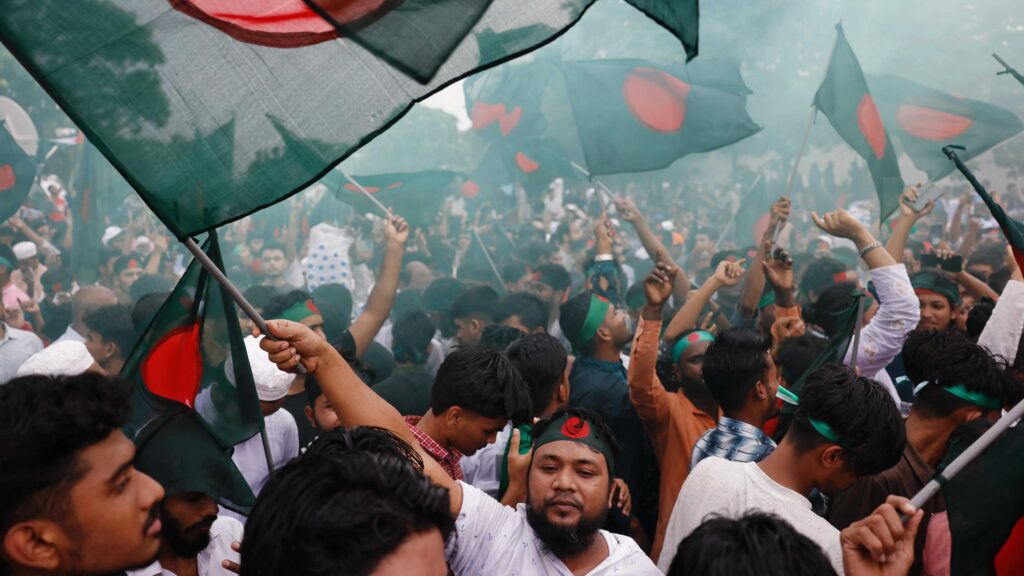
On 11 February, the National Election Investigation Commission of Bangladesh, appointed by the Interim Government (IG) to inquire into the past three general elections held in 2014, 2018, and 2024, submitted its report to the Chief Adviser and head of the IG, Prof. Muhammad Yunus. The Commission’s findings were a reconfirmation of what is largely known. The ‘last three national elections were orchestrated at the highest levels of the state, with segments of the administration, police, Election Commission, and intelligence agencies mobilised to implement the plans’, the commission said. During those elections, control of the electoral process moved away from the EC to the administration, the investigation commission noted. These imperfect elections heralded a regime that grew autocratic over time, adding to Bangladesh’s woes, resulting in at least 1400 deaths, and subsequently, the deposition of Prime Minister Sheikh Hasina.
Hasina’s Legacy of Regression
The former Prime Minister, who the country’s International Crime Tribunal has awarded a death sentence, has criticised the upcoming elections as anti-democratic and has urged people not to vote. Life has indeed come a full circle for Hasina. Between 2014 and 2024, she presided over a regime that made elections in Bangladesh a one-sided affair, a virtual mockery of the parliamentary process.
In the January 2024 elections, seven months before Hasina’s ouster in August 2024, her party, the Awami League (AL), won 222 of the 300 parliamentary seats, having claimed 48 per cent of the total votes cast in the poll. Independent candidates won 63 seats, and the Jatiya Party (JP), the main opposition in the previous parliament, could win only 11 seats. The BNP boycotted the elections. These numbers, however, do not tell the story of this bizarre election. Electioneering was marked by the AL urging people to vote and the BNP asking voters to abstain. In many seats, with no credible opposition candidate, the AL put up dummy candidates to make the polling appear authentic and competitive. However, with the results of the elections a foregone conclusion, only 40 percent people cast their ballot, according to the Election Commission. That official estimate of this voter turnout has also been contested.
Unlike the 2024 elections, large-scale poll-related violence had marred both the 2018 and 2014 elections. In the run-up to the vote in December 2018, in the first half of the year, around 380 members of minority groups, including Hindus, had been attacked. Electronic voting machines were used on a limited scale for the first time, although they were dropped in the 2024 polls amid criticisms of rigging. The AL won 288 of the 300 seats in 2018, a record win in the country’s parliamentary polls. However, the rights groups and global observers termed the entire process a sham. Many ordinary voters took to social media to complain about not being able to cast their votes.
In 2014, four major political parties, including the BNP, boycotted the elections. There were no candidates other than AL nominees in 153 of the 300 seats. The party won 234 seats. Before that, in 2011, the caretaker government system that ensured conduct of elections under a non-partisan administration to oversee the process had been abolished through the 15th Amendment to the Constitution of Bangladesh, by the AL government. The move followed the Supreme Court bench delivered a split 4-3 verdict, terming the 13th Amendment—which had introduced the caretaker system in 1996—unconstitutional. In November 2025, the decision was reversed by a Supreme Court bench with prospective application.
Past Imperfect
While each of these three previous elections does tell a tale of undermining of democracy and gradual consolidation of the AL as a monolithic political entity whose end could have been brought only by a popular upheaval, since 1971, the year of the country’s birth, only four of the 12 elections have been considered to be free and fair. The rest have frequently been mired in violence, protests and allegations of vote rigging. Each of these exercises to judge popular support behind political parties has been no more than one political party’s attempt to upstage the other by adopting deceitful means. The AL, the Bangladesh Nationalist Party (BNP) and also the JP, founded by the erstwhile military dictator General H M Ershad, have been responsible.
In the first ever-elections in March 1973, despite being clear favourites to win, the AL engineered the kidnapping of opposition leaders using affiliated gangs to prevent them from filing nomination papers and, in some constituencies, stuffed ballot papers. The party won 293 of the 300 seats in parliament in a landslide that almost eliminated other political parties in the house. In 1974, Rahman followed up by banning all opposition parties as well as most press members from parliament, essentially turning Bangladesh into a one-party state. In 1979, after the multiparty system had been restored, the BNP won, amid allegations of rigging by the AL.
The 1988 polls were boycotted by the opposition parties and were won by the JP with an overwhelming majority of 251 seats. JP had won the 1986 elections, largely considered a fair poll. The 1991 elections, also considered to be fair, were won by the BNP. However, less than 21 percent voters cast their ballot in the subsequent 1996 elections, amid a boycott by most parties. The BNP won with 278 seats; however, that government lasted only for 12 days. In the second election that year, under a caretaker government, the AL won with 146 seats.
In 2001, AL’s fortune changed, and it lost to BNP in 2001, but won the next election in 2008 by putting together a grand alliance with other parties, including the JP. The failure to agree on a candidate to head the necessary caretaker government had delayed the polls from 2006 to 2008. Over 80 percent voters cast their ballot. That was the last time the country had seen a free and fair poll.
A Lost Chance
On 12 February 2026, Bangladesh will vote for yet another imperfect election, without the AL in the fray. This is the first time since 1991 that the AL is not participating in the elections. The party has been declared illegal and has been disbanded. Its millions of cadres and followers haven’t lost their voting rights, but now face the ominous choice of either abstaining or voting for a party or alliance that seeks their marginalisation. The IG has unsuccessfully pursued the extradition of Sheikh Hasina from India, before and after the death verdict, and has risked spoiling Bangladesh’s historical relations with New Delhi. It had the option of letting the AL contest in the elections without its leader, Hasina and test its remaining popularity among the voters, but chose to go by the mood of the protesters by banning the party altogether.
Whether this decision was right is a matter of debate and has been criticised at various levels. In the absence of Hasina, the IG under Yunus also had an opportunity to bring together the entire nation through a process of reconciliation. Over the 17 months it has been in power, the IG had the choice of healing a bruised nation, but seemed to have opted for a path of retribution. The killings of several AL supporters in the country and the counterviolence targeting some of the leaders of the 2025 ‘Monsoon revolution’ and the political parties, including the BNP has plunged the country into a cycle of retributive violence, casting doubt on the feasibility of the process. Notwithstanding Yunus’ assertion that the elections would be held ‘no matter who says what’, the demoralised security forces, especially the police, lack the capacity to gain control over such violence. Each passing day, as the date of the polls draws closer, violence is likely to surge.
The BNP is projected to win, especially since its main rival has been barred from contesting. A public opinion poll conducted in early January 2026 found that 70 percent the respondents will vote for the party. The seven-party alliance, which includes the new kid in town, the fragmented National Citizens Party (NCP) and the seasoned Jamaat-e-Islami (JeI), is not expected to present a significant challenge to the cadre-based BNP, led by Tarique Rahman, the son of the late Prime Minister Khaleda Zia. Additionally, Zia’s death on 30 December 2025 is likely to generate further sympathy for the party.
The real challenge, however, may arise after the elections. The new government’s abilities will be put to the test against a variety of expectations and needs: uniting the country, restoring the morale and effectiveness of the security forces, improving relations with India, and continuing the necessary reforms to strengthen the country’s democratic credentials. Historically, most of the political parties in the country have failed to demonstrate the capability to meet these challenges effectively.
(Dr. Bibhu Prasad Routray is the Director of MISS. This analysis has been published as part of the ongoing “Fragility, Conflict, and Peace Building” project. All Mantraya publications are peer-reviewed.)