MANTRAYA SPECIAL REPORT#25: 17 MARCH 2026
BIBHU PRASAD ROUTRAY & SHANTHIE MARIET D’SOUZA
Abstract
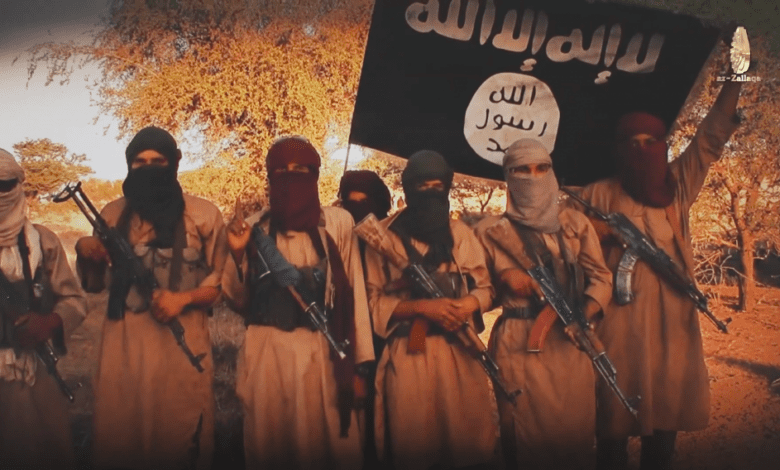
As wars in Iran and Ukraine, as well as China’s continued stealth expansion, absorb the strategic focus of major powers, jihadist organisations — particularly the Islamic State and al Qaeda — are exploiting the resulting vacuum to revive their position across South Asia and West Africa. IS-KP consolidates in Pakistan and Afghanistan, ISWAP intensifies its Ramadan offensive in Nigeria, and ISSP strikes deeper into the Sahel. Flawed and politically driven American counterterrorism responses offer little strategic correction for a threat dismissed as irrelevant to the Trump administration.
Fog of War: Ukraine and Iran
As the war in Iran and Ukraine rages, together with China’s continued expansion, noticeably in the South China Sea but also in Myanmar/Burma, major global players are preoccupied to the extent that non-state extremist actors have virtually free rein to expand. The global terror groups Islamic State and al Qaeda sense a window of opportunity to consolidate in their current strongholds and push beyond. Much of this organisational expansion and accompanying violence is taking place in Asia and West Africa. However, if the wars drag on, limiting security responses of the major nations to the evolving threats, such violence can potentially spread to Europe and even the United States.
Spectre of Violence: Blast in Pakistan
On the morning of 6 February, a suicide bomber attacked a Shia mosque in Pakistan’s capital, Islamabad, killing 31 people and injuring over 169. Hundreds of worshippers had gathered to offer their weekly prayers on a Friday, when the lone attacker opened fire at security personnel outside the mosque before entering and detonating a suicide vest. Predictably, the Pakistani authorities initially blamed India but then shifted focus westwards to Afghanistan. Meanwhile, IS-KP claimed responsibility for the attack, claiming the attacker as one of its own. Islamabad consequently carried out airstrikes on ‘hideouts and safe havens’ in several Afghan provinces, claiming to have killed several militants and further worsening bilateral relations with Kabul. The effort appeared to have clubbed the IS-KP with the Tehreek-e-Taliban Pakistan (TTP), although both are distinct organisations.
Nevertheless, the attack in Pakistan, notwithstanding the Pakistani military’s rather directionless and unproductive counter-terrorism effort, proves that the threat of IS-KP continues in the region, with the group’s cadres, organisational network, and logistical arrangements more or less intact and capable of carrying out episodic yet major strikes. IS-KP is present and active in Pakistan and Afghanistan, and it is continuously gaining strength as Islamabad tries to look externally for the problem. It still has about 4,000-6,000 fighters, including Pakistanis, in addition to Tajiks, Uzbeks, and Turks, who operate primarily in eastern Afghanistan and Pakistan’s north and south-west. The force is considered especially dangerous because it attracts experienced fighters and recruits aggressively online.
Expansion in Africa: The “Ramadan Offensive”
Since late February 2026, Nigeria’s northeastern Borno state, the epicentre of Jihadist violence in the country, has witnessed intense terrorism carried out by the Islamic State’s West Africa Province or ISWAP, a breakaway faction from the original Boko Haram but considered more dangerous due to its more considered strategic approach and modulation of tactical atrocities. In the latest episode, simultaneous coordinated and complex attacks were carried out by ISWAP combatants, reportedly armed with anti-aircraft machine guns and drones, on seven Nigerian military camps between 4 and 9 March. Supporting the major attack, the insurgents simultaneously targeted several other nearby camps with mortars, improvised explosive devices (IEDs), and small-arms fire to prevent the reinforcements from reaching the main attack sites. A lone ISWAP suicide bomber detonated a suicide vehicle-borne IED at another Nigerian army camp.
ISWAP has averaged roughly seven attacks per week on Nigerian security forces in Borno thus far in 2026. Termed the ‘Ramadan offensive’, the actions have focused upon multiple Nigerian military camps simultaneously, thus forcing their consolidation into ever larger aggregates. This necessarily cedes state presence amongst the population, reducing the military to episodic patrols, which in turn can be subjected to ambushes even as they achieve little. A well-tested technique, used in all insurgencies, the complex and severe nature of ISWAP actions has nevertheless proved beyond the capacity of the Nigerian forces. While actual data of fatalities is hard to come by, and Nigerian security forces always claim success in defeating such attacks, at least 65 Nigerian soldiers were reported to have been killed in the past two weeks. Simultaneously, the insurgents have abducted 300 people, including women and children.
In the adjacent Western African nation of Niger, on the morning of 9 March, the Islamic State’s Sahel Province (ISSP) launched an attack on the Tahoua airport. This assault followed its earlier attack on the Niamey air base in late January. Insurgents stormed the airport compound while another group targeted the city centre of Tahoua. The attackers clashed with Nigerien soldiers defending the base for nearly 45 minutes before momentarily withdrawing. They regrouped and subsequently attacked a nearby army base but were ultimately repelled. This marked ISSP’s first-ever attack on the city of Tahoua. The assaults resulted in the destruction and damage of aircraft, helicopters, and some drones, significantly impairing Niger’s transportation and intelligence, surveillance, and reconnaissance (ISR) capabilities.
In West Africa, al Qaeda’s Sahelian affiliate, Jama’at Nusrat al Islam wa al Muslimeen (JNIM), recently attacked Kofouno village in the Alibori region, resulting in the deaths of at least 15 soldiers and wounding four others. This marks the group’s deadliest attack in Benin since April 2025. The incident follows a thwarted coup in December 2025 and signifies the end of a truce between JNIM and the Beninese government, which was mediated by al Qaeda in the Islamic Maghreb (AQIM). A JNIM commander who defected to the rival group ISSP claimed that AQIM had pressured JNIM into accepting a truce with Benin and deploying forces from eastern Burkina Faso to prevent the ISSP from expanding into Benin. Since then, clashes between JNIM and ISSP have sharply escalated in Burkina Faso.
JNIM has a history of negotiating with weaker governments, entering into agreements that may or may not be sustainable. This gambit allows the group to expand while the governments often choose to ignore their activities. For instance, in Mali, JNIM negotiated peace agreements backed by the government with local communities to end blockades, ease restrictions, and facilitate prisoner exchanges. Behind the scenes, it consolidated its position. It is noteworthy that in the aforementioned – leaving Nigeria aside (see below) – Russian contract forces have replaced Western support but have proved noticeably unsuccessful. They share this lack of demonstrable progress with the Americans.
The American Flaws: The “Christmas Gift”
The American response to the current violent expansion by the Islamic State has been based on a flawed sense of achievement. For the Trump II administration, Pakistan is lauded for its ostensible assistance in fighting terrorism. In February 2025, for instance, Pakistan arrested the alleged planner of an IS-KP suicide attack in Kabul that killed 13 American service members and about 170 civilians in August 2021, and extradited him to America in March. This earned a rare public praise from Donald Trump and also helped Field Marshal Asim Munir, Pakistan’s army chief, to secure an invitation to a White House lunch on 18 June 2025. Roughly a week earlier, on 10 June, speaking during a testimony before the US House Armed Services Committee, General Michael Kurilla, then head of America’s Central Command, termed Pakistan’s co-operation on counter-terrorism, ‘phenomenal’. While Pakistan has indeed cooperated with the US, such cooperation is selective and is mostly directed at securing Western assistance to its counter-terror efforts targeting the TTP and strengthening Pakistan-US bilateral ties vis-à-vis India and Afghanistan. It has achieved very little in containing the growth of terroristic groups within the region and works at cross-purposes to American strategic objectives through its anti-Indian and pro-Chinese efforts.
Likewise, in West Africa, the US finds itself in a contradictory position. Having been expelled from its interior West African position by the three states which have formed the Alliance of Sahel States – Niger, Burkina Faso, and Mali – Washington (as well as Paris) has seen all of these turn to Moscow. Benin has continued to cooperate with the US, but is a weak reed. Equally tenuous is the US rationale for assisting Nigeria. Though a long-time partner in combating terrorism, Nigeria surfaced on the Trump II radar screen only when right-wing activists claimed the jihadist threat was directed principally at Christians. Intervention followed.
In February 2026, 200 US troops arrived in northern Nigeria to train their counterparts, weeks after the US carried out performative airstrikes on terrorists in northwest Nigeria on 25-26 December 2025. The strikes effectively hit nothing. President Donald Trump claimed the contrary, referring to the alleged damage as a ‘Christmas gift’ to terrorists in what was a significant escalation in U.S. military involvement in West Africa – though not an unusual one for Washington, which has long privileged grandstanding for effective action. The Clinton missile attack of 20 August 1998 on Sudan’s Al-Shifa pharmaceutical factory comes to mind, a strike ostensibly targeting Al Qaeda chemical weapons production but in reality striking medicine production.
In any case, the Nigerian strike involved Tomahawk cruise missiles fired from the Arleigh Burke-class destroyer USS Paul Ignatius in the Gulf of Guinea, as well as MQ-9 Reaper drones launched from assets in the region. American and Nigerian officials claimed ‘multiple’ terrorists were killed, with some estimates citing between 155 and 200+ fatalities. However, local reports – augmented by Western on-the-ground reporting – suggested the strikes more likely hit empty farmland or result in unexploded ordnance falling near civilian areas.
The Trumpian rationale for solving terrorism in Nigeria from the sky and now through training of the otherwise ill-prepared and motivated Nigerian soldiers is guided by a miscalculated assessment of annihilation of Christians by Islamist terrorists. Leaving aside the stark reality that ISWAP and Boko Haram (the latter still exists and often does battle with the former) are insurgencies that use terrorism as but one weapon, hence “terrorism” is not the key issue except in some tactical instances; the US framing of the conflict is hopelessly off-base. Indeed, Washington has designated Nigeria as a ‘Country of Particular Concern’ (CPC) due to what it identifies as severe violations of religious freedom, which is simply to muddle both terminology and analytical approach. Focusing upon protecting the Christians in particular localities where they have been attacked by substate actors, in a country which is roughly divided 50-50 between Muslims and Christians and does not suffer from communalism per se, would seem all but guaranteed to stir the pot. In the hardest hit areas, for instance, the local militia resisting the violent radical Islamists are overwhelmingly Muslim. Likewise, casualties are overwhelmingly Muslims, just as the states in which the insurgent groups base themselves are Muslim. There are local intricacies that in some areas can support a narrative calling for Christian self-defence, but a framing of the situation as Christian persecution is off base.
Call to Jihad and its Impact?
On 21 February, the Al-Furqan Media outlet affiliated with the IS released a 35-minute audio in which the group’s spokesperson Abu Hudhayfah Al-Ansari called on Islamic State supporters – particularly jihadists from Libya, Morocco, Tunisia, and Algeria – to migrate and join the fight in countries where the group is active. While making a usual call for attacks on the United States, Israel, the European Union, Russia, and other “infidel” countries, he expressed hope that the next major attack would strike “the heart of Europe.”
While Donald Trump’s America may consider itself more or less removed from the threat posed by IS, the 12 March incident at Old Dominion University in Norfolk provided an example of why such a sense of safety may be misplaced. Mohamed Bailor Jalloh, a former Army National Guard member and naturalised U.S. citizen in his mid-30s, carried out a shooting at the university that targeted the ROTC (Reserve Officers’ Training Corps) program, killing an instructor and wounding two other individuals before he was killed by the students in the process of subduing him.
Jalloh, who was born in Sierra Leone and once lived in Sterling (Virginia), visited Nigeria in 2016, where he met with an Islamic State member. He was apparently seeking a Muslim wife when he reached out to an Islamic State recruiter and instead agreed to take part in a terrorist attack in America. He was arrested and, in 2017, was sentenced to 11 years in prison for attempting to supply support to the Islamic State terrorist group. He had been released from prison on 23 December 2024. During his litigation, his attorney had described Jalloh as a gullible ‘follower’ driven more by drug use and untreated trauma (referring to the alleged sexual abuse suffered during his childhood) than radicalism.
Prognosis
Present international distraction from the growth of violent radical Islamism, particularly those regarded as far away in the Sahel and Asia, leaves a gloomy diagnosis of a situation conducive to the revival of groups once thought down for the count, such as Al Qaeda and the Islamic State. They have been able to strengthen themselves, regroup and expand. As geopolitical attention remains focused upon the likes of “cheap-kills” of alleged drug boats and “not-so-cheap-kills” of Iranian targets – all tactics absent strategy – jihadist groups are methodically exploiting the vacuum — consolidating in their strongholds, expanding into new territories, and demonstrating increasingly sophisticated operational capabilities.
The American response is shaped more by domestic political considerations than strategic clarity; thus, it is overwhelmingly performative in nature. As such, it risks being both insufficient and misdirected. The Old Dominion shooting serves as a stark reminder that geographic distance offers no guaranteed insulation. Unless major powers recalibrate their counter-terrorism priorities and forge coordinated responses, the window of opportunity these groups are currently exploiting could translate into a significantly more dangerous global security landscape.
References
Alexander Palmer and Alexander Margolis, “What Is Next After the Suicide Attack in Pakistan?”, Center for Strategic and International Studies, 6 February 2026, https://www.csis.org/analysis/what-next-after-suicide-attack-pakistan.
Eromo Egbejule, “At least 65 Nigerian soldiers killed in jihadist raids in country’s north-east”, The Guardian, 11 March 2026, https://www.theguardian.com/world/2026/mar/11/nigerian-soldiers-killed-jihadist-raids-north-east.
Peter Hermann and Omari Daniels, “Islamic State sympathizer opens fire at Old Dominion University, killing one”, Washington Post, 13 March 2026, https://www.washingtonpost.com/dc-md-va/2026/03/12/shooting-old-dominion-university/
(Dr. Bibhu Prasad Routray is the Director of MISS. Dr. Shanthie Mariet D’Souza is the Founder & Executive Director of MISS. This special report has been published as part of Mantraya’s ongoing “Fragility, Conflict and Peace Building” and “Mapping Terror & Insurgent Networks” projects. All Mantraya publications are peer-reviewed.)