MANTRAYA ANALYSIS #97: 08 MAY 2026
LEO C. NWOYE
Abstract
Conflict-related sexual violence against men and boys is widespread, extensively documented, and structurally invisible. Drawing on six contemporary situations and conflict contexts, this article demonstrates that male sexual victimisation is not exceptional but systemic, spanning detention regimes, military operations, and forced migration. Survivor testimony across these contexts reveals strikingly consistent patterns. Yet the international system consistently fails to recognise these acts as sexual violence. Eight years of research, including interviews with 44 practitioners from across the Yugoslav and Rwanda tribunals, the International Criminal Court and supporting institutions, reveals three divergent institutional trajectories — none representing steady progress. When sexual violence is committed against a male body, the system strips away its sexual character. The crime is reclassified. The survivors disappear from view. At stake is not only recognition for male survivors and victims, but the credibility of the international system that claims to speak for them.
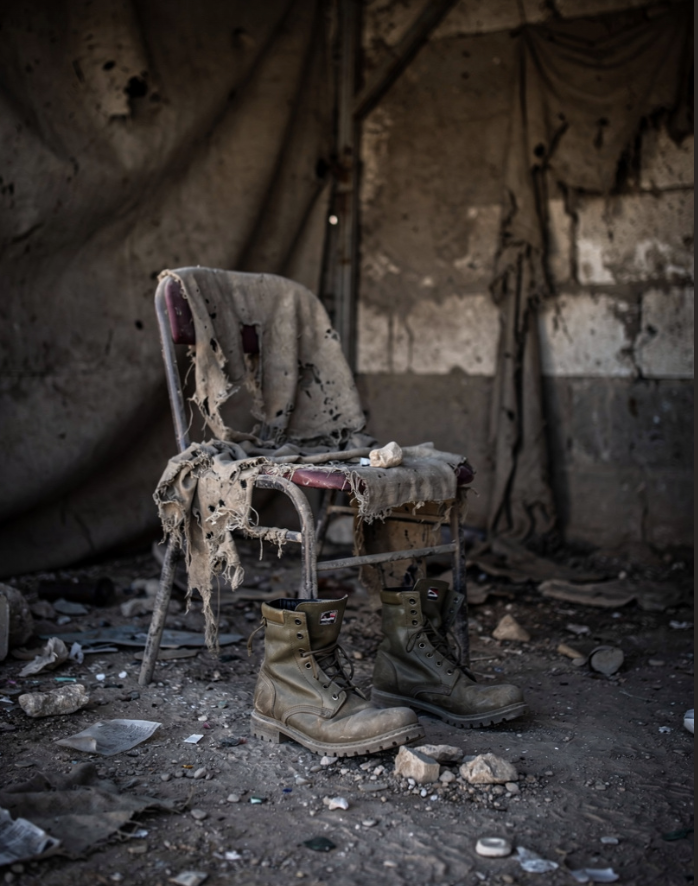
(AI-generated image for representational purposes only)
A Palestinian former detainee at Ofer Prison asked to remain anonymous—not out of fear, he said, but to protect his children. “I’m afraid that one day, someone will say to them: your father was raped by a dog.”[1]
A former Israeli hostage, Rom Braslavski, held for months by Palestinian Islamic Jihad, described being stripped, tied up, and subjected to repeated sexual assault. “It is sexual violence,” he said, “and its main purpose was to humiliate me. The goal was to crush my dignity, and that’s exactly what he did.” It was, he said, “something even the Nazis didn’t do.”[2]
In Ukraine, Oleksii Sivak, released from Russian captivity, asked his doctors: “Am I meant to see a gynaecologist? […] We’ve had a war since 2014,” he said, “and no one had even thought about male victims of sexual violence.”[3]
We don’t talk about this. But it is happening—systematically, across continents, and in plain sight.
Documented, Widespread, Sidelined
In March 2025, the UN Commission of Inquiry concluded that sexual violence against Palestinian men in Israeli custody had become “standard operating procedure”[4]—a practice documented in Israeli detention since at least 2015.[5] Ibrahim Salem described nearly eight months of sexual torture at Sde Teiman, testifying that children were also targeted: “I swear to God there was a young guy from Zietoun who was raped, not a young man, a child. He was 15 years old.”[6] Dr Adnan Al-Bursh, a surgeon, died in custody; Francesca Albanese, the UN Special Rapporteur on the Occupied Palestinian Territory, said he was “likely raped to death.”[7] In early March 2026, Israeli settlers sexually assaulted a Palestinian shepherd, zip-tying his penis in front of his family.[8]
When leaked CCTV footage from the Sde Teiman military prison captured guards taking a Palestinian detainee aside and shielding the assault from view,[9] five reserve soldiers were eventually indicted—not for sexual violence, but for “severe physical assault by a group.”[10] On 12 March 2026, Israel’s Military Advocate General dropped all charges. The prime minister hailed the soldiers as “heroic fighters”; right-wing politicians denounced the case as a “blood libel.” The official who leaked the footage was arrested; those accused of it walked free.[11]
Guy Gilboa-Dalal, a former Israeli hostage held for over two years in the tunnels of Gaza, has publicly described how a captor sexually assaulted him on two occasions. After the first: “He put a knife to my throat and a gun to my head and said, ‘If you tell anyone, I’ll kill you.’”[12]
The dual visibility is remarkable: Palestinian and Israeli men targeted in the same conflict. Yet each side rejects claims against itself whilst amplifying those against the adversary.
In Ukraine, men constitute approximately 70% of documented cases of conflict-related sexual violence [CRSV]—262 out of 376 recorded by the UN.[13] The UN Commission of Inquiry found a recurrent use of sexual violence as a form of torture in “almost all” the detention centres where Russian authorities held Ukrainians.[14]
A psychologist treating two castrated soldiers said the Russians performed the procedure “very skilfully, as if they knew how to do it.” The younger man attempted suicide. The older one insisted on rejoining the fighting: “He says he’s needed, and it’s easier being in a place where there are no women.” In July 2022, a video posted on pro-Russian Telegram channels showed a soldier castrating a bound prisoner with a box-cutter knife; a second video appeared to show the same prisoner shot, his testicles stuffed in his mouth.[15] The aforementioned Sivak, who founded Ukraine’s first support network for male survivors, speaks publicly because “if I am silent, it’s like it never happened, and that means it is not happening now. The reality is that many men are still in basements.”[16]
In Sudan, during the Darfur genocide, men were raped with sticks and gun barrels and then burned alive; penises were severed and forced into victims’ mouths. Men were forced to watch their wives being raped whilst perpetrators taunted them: “Come get your girls if you can.”[17] The patterns have persisted: the UN Fact-Finding Mission documented rape and genital beatings by both the Rapid Support Forces and Sudanese Armed Forces, yet only two of 51 paragraphs in its sexual violence section substantively address male victims.[18] An absence of data, as one analyst observed, does not mean an absence of incidents.[19]
In Syria, more than one million—mostly men—were detained by the Assad regime since March 2011, during its period in power.[20] Of those detained, 94% were male; 97% of the forcibly disappeared were male. An SGBV officer admitted that sexual torture was reclassified because “if we consider the torture of people as gender-based violence, then we will have too many.”[21] Among the Rohingya, the UN classified identical acts as genocide when committed against women but as crimes against humanity when committed against men.[22] Along the Central Mediterranean route, a protection officer told researchers: “Everyone knows when a man says, ‘I’ve gone through Libya,’ it is a euphemism for rape.” The EU funds the Libyan Coast Guard, which returns them to the detention centres where it occurs.[23]
Three Courts, Three Decades, One Pattern
The crime was never new. Evidence of male sexual victimhood in conflict stretches from antiquity to the World War II tribunals at Nuremberg and Tokyo, which addressed such acts—including the castration and forced sterilisation of Jewish, Polish and Soviet men—within the legal categories then available: torture, ill-treatment, and cruel treatment. No discrete category of sexual violence yet existed.
Nearly three decades ago, a war crimes tribunal first acknowledged that men could be victims of sexual violence under international criminal law. Since then, the crimes themselves have come to be read as gender-neutral—applying to men and women alike. Policies proliferated. On paper, the revolution happened.
In practice, it did not.
Eight years of research, including interviews with 44 practitioners from across the Yugoslav and Rwanda tribunals, the International Criminal Court and supporting institutions, reveals three divergent trajectories.[24]
At the Yugoslav tribunal, the 2001 Todorović case marked a transformative moment—the first explicit recognition of male rape as a crime against humanity. Male sexual victimisation featured in 18 cases at the tribunal—more than any other international court before or since. Yet that record sits in silence, rarely cited and seldom invoked. As one practitioner observed, this record “was an accident”—adding more bluntly: “Why would we take the risk of charging it as rape when we know for sure it’s a slam dunk with torture?”
At the Rwanda tribunal, male sexual victimisation drew “pas intéressé”—no interest—and zero prosecutions were achieved across 21 years despite strong evidence. Assiel Kabanda, a Tutsi trader, was castrated during the Rwandan genocide. Though the tribunal’s statute (with marginally broader CRSV provisions than the ICTY’s), like Nuremberg’s and Tokyo’s, lacked an enumerated category of sexual violence beyond rape, the same judgment recognised post-mortem sexual violence against a Tutsi woman as sexual in nature—yet for Kabanda, the court convicted under “inhumane acts” without naming the sexual character of the violence.
At the ICC, operating under the most expansive CRSV framework of any international tribunal/court, in one of its earliest cases, prosecutors presented evidence that Luo men had been subjected to forced circumcision and penile amputation during Kenya’s 2007–2008 post-election violence. The Pre-Trial Chamber in 2012 refused to call it sexual violence. Forced circumcision was merely an “inhumane act.” Subsequent cases have produced uneven recognition.
Three courts, three decades, one pattern: when sexual violence is committed against a male body, the system strips away its sexual character.[25]
Whose Suffering Is Politically Useful?
Whose suffering becomes emblematic? Whose testimony is believed? Whose trauma is diplomatically useful? In international forums, evidence of sexual violence is selectively invoked to support arms embargoes or contest genocide determinations—depending on whose suffering is politically useful. When male victims’ suffering serves no political narrative, it disappears. When it does, it is instrumentalised rather than addressed.
There are signs this is beginning to shift—at the domestic level. In September 2025, Colombia’s Special Jurisdiction for Peace [JEP] recognised 104 male CRSV victims—including 35 who were children at the time.[26] The JEP succeeded by fundamentally reconceiving who counts as a victim.
Recognition Without Remedy
Yet across most contexts, CRSV against males remains widespread, documented, and structurally sidelined.
Niama Abualkebash, whose husband was sexually assaulted by Israeli settlers in early March 2026, said: “This is slow death. Doing this to a man is to kill him.”[27]
When we say “never again,”[28] do we mean for everyone?
At stake is not only recognition for male survivors and victims, but the credibility of the international system that claims to speak for them.
End Notes
[1] Middle East Eye. (2025, December 20). Palestinian ex-prisoner recounts rape by police dog in Israeli jail [Video]. YouTube. https://www.youtube.com/watch?v=FMClnrt6p1U.
[2] Ynetnews, “Former hostage reveals sexual abuse during 738 days of captivity in Gaza” (11 May 2025), https://www.ynetnews.com/article/hkvk9bfyzx; Diamond, J., “Newly freed Israeli hostage says he was sexually assaulted in captivity,” CNN (5 November 2025), https://edition.cnn.com/2025/11/05/middleeast/israel-hostage-braslavski-abuse-intl.
[3] Graham-Harrison, E., & Mazhulin, A., “‘Carved on bodies and souls’: Ukrainian men face ‘systemic’ sexual violence,” The Guardian (29 October 2024), https://www.theguardian.com/world/2024/oct/29/carved-on-bodies-and-souls-russias-use-of-male-sexual-torture-in-ukraine
[4] Independent International Commission of Inquiry on the Occupied Palestinian Territory, including East Jerusalem, and Israel [“UN Commission of Inquiry”]. (2025, 13 March). “More than a human can bear”: Israel’s systematic use of sexual, reproductive and other forms of gender-based violence since 7 October 2023 (A/HRC/58/CRP.6, paras.193–194, 224). https://www.ohchr.org/sites/default/files/documents/hrbodies/hrcouncil/sessions-regular/session58/a-hrc-58-crp-6.pdf.
[5] Weishut, D. J. N. (2015). Sexual torture of Palestinian men by Israeli authorities. Reproductive Health Matters, 23(46), 71–84. https://doi.org/10.1016/j.rhm.2015.11.019.
[6] Middle East Eye. (2024, August 11). Palestinian in leaked Sde Teiman photo speaks out (Ibrahim Salem) [Video]. YouTube. https://www.youtube.com/watch?v=2WKeKZ6Csro.
[7] Cordall, S. S. (2024, 24 November). Dying in ‘hell’: The fate of Palestinian medics jailed by Israel. Al Jazeera. https://www.aljazeera.com/news/2024/11/24/dying-in-hell-palestinian-medics-jailed-by-israel.
[8] Halbfinger, D. M., & AbdulKarim, F., “Palestinian man recounts brutal sexual assault by Israeli settlers,” The New York Times (18 March 2026), https://www.nytimes.com/2026/03/18/world/middleeast/west-bank-sexual-assault-israel-settlers.html.
[9] Ali, F. (2024, August 8). Israeli media airs footage showing alleged sexual abuse of Palestinian detainee [Video]. The Guardian. https://www.theguardian.com/world/video/2024/aug/08/israeli-media-alleged-sexual-abuse-palestinian-detainee-video.
[10] See note 4 above, UN Commission of Inquiry, 2025, paras.119–120, 154–156.
[11] Reuters. (2026, March 12). Israel drops charges against soldiers accused of abusing Gaza detainee. Reuters. https://www.reuters.com/world/middle-east/israel-drops-charges-against-soldiers-accused-abusing-gaza-detainee-2026-03-12/.
[12] Kershner, I. (2026, February 3). A Hamas hostage’s secret ordeal. The New York Times. https://www.nytimes.com/2026/02/03/world/middleeast/hamas-hostage-abuse.html.
[13] Janowski, K. (2024, November 25). In Ukraine, survivors speak out about conflict-related sexual violence. Office of the United Nations High Commissioner for Human Rights. https://ukraine.un.org/en/284398-ukraine-survivors-speak-out-about-conflict-related-sexual-violence.
[14] Office of the United Nations High Commissioner for Human Rights. (2024, September). UN Commission of Inquiry on Ukraine finds additional evidence of common patterns. https://www.ohchr.org/en/press-releases/2024/09/un-commission-inquiry-ukraine-finds-additional-evidence-common-patterns; see also Independent International Commission of Inquiry on Ukraine. (2024, October 25). Report of the Independent International Commission of Inquiry on Ukraine (A/79/549), paras.47–49, 80–85. United Nations General Assembly. https://docs.un.org/en/A/79/549.
[15] Lamb, C. (2023, June 17). She thought she was unshockable, then two castrated Ukrainian soldiers arrived. The Sunday Times. https://www.thetimes.com/world/russia-ukraine-war/article/ukraine-soldiers-castrated-russia-war-0hflzhzlv.
[16] Graham-Harrison & Mazhulin, “‘Carved on bodies and souls,’” The Guardian, 29 October 2024.
[17] Ferrales, G., Brehm, H. N., & McElrath, S. (2016). Gender-based violence against men and boys in Darfur: The social agonies of genocide. Gender & Society, 30(4), 565–589, at 573–576. https://doi.org/10.1177/0891243216636331.
[18] Independent International Fact-Finding Mission for the Sudan. (2024, October 23). Findings of the investigations conducted by the Independent International Fact-Finding Mission for the Sudan (A/HRC/57/CRP.6), Section VII.c, paras.165–215. https://www.ohchr.org/sites/default/files/documents/hrbodies/hrcouncil/sessions-regular/session57/A-HRC-57-CRP-6-en.pdf. Author’s count of Section VII.c: paragraphs 171 and 198 are the only two that substantively address male victims; paragraph 166 acknowledges in passing that further investigation into sexual violence against men and boys is required.
[19] Mhlambiso, X. (2024, September 5). More focus needed on sexual violence against males in Sudan. Institute for Security Studies. https://issafrica.org/iss-today/more-focus-needed-on-sexual-violence-against-males-in-sudan.
[20] Kivlahan, C., AlSharif, M., Elliott, I., Pereira, A. G., Hallak, Z., Yonso, R., Odaimi, A., AlHafez, N., & Aswad, M. (2023). Long-term physical and psychological symptoms in Syrian men subjected to detention, conflict-related sexual violence and torture: Cohort study of self-reported symptom evolution. EClinicalMedicine, 67, 102373, pp.1–2. https://doi.org/10.1016/j.eclinm.2023.102373.
[21] Chynoweth, S. (2017). “We keep it in our heart”: Sexual violence against men and boys in the Syria crisis. United Nations High Commissioner for Refugees, pp.25, 64. https://www.refworld.org/reference/research/unhcr/2017/en/119183.
[22] Independent International Fact-Finding Mission on Myanmar. (2018, September 17). Report of the Detailed Findings of the Independent International Fact-Finding Mission on Myanmar (A/HRC/39/CRP.2), paras.675–676, 939–940. https://www.ohchr.org/sites/default/files/Documents/HRBodies/HRCouncil/FFM-Myanmar/A_HRC_39_CRP.2.pdf; Hospodaryk, V. (2023). Male and gender-diverse victims of sexual violence in the Rohingya genocide: The selective narrative of international courts. International Journal of Transitional Justice, 17(2), 252–267, at 264. https://doi.org/10.1093/ijtj/ijad013; see also Women’s Refugee Commission. (2018, November). ‘It’s happening to our men as well’: Sexual violence against Rohingya men and boys. https://www.womensrefugeecommission.org/wp-content/uploads/2020/04/Rohingya-Report-Final.pdf.
[23] Women’s Refugee Commission. (2019, March). ‘More than one million pains’: Sexual violence against men and boys on the central Mediterranean route to Italy (pp.20, 26). https://www.womensrefugeecommission.org/wp-content/uploads/2020/04/Libya-Italy-Report-03-2019.pdf.
[24] Nwoye, L. C. (2026). Three Courts, Three Paths: Institutional Conceptions and Responses to Conflict-Related Sexual Violence against Men and Boys across the ICTY, ICTR, and ICC, 1993–2023 [Doctoral thesis, University of St Andrews]. University of St Andrews Research Repository. https://hdl.handle.net/10023/33621
[25] Sellers, P. V., & Nwoye, L. C. (2018). Conflict-related male sexual violence and the international criminal jurisprudence. In M. Zalewski, P. Drumond, E. Prügl, & M. Stern (Eds.), Sexual violence against men in global politics (pp. 211–235). Routledge. https://doi.org/10.4324/9781315456492-19
[26] All Survivors Project, “All Survivors Project welcomes the JEP’s historic decisions accrediting men as victims of conflict-related sexual violence” (9 September 2025), https://allsurvivorsproject.org/wp-content/uploads/2025/09/ASP-Statement-Final.pdf
[27] See note 8 above, Halbfinger & AbdulKarim, 2026.
[28] For example, International Criminal Court. (2018, September 24). Statement by Judge Chile Eboe‑Osuji, President of the International Criminal Court, at the United Nations General Assembly Nelson Mandela Peace Summit. International Criminal Court. https://www.icc-cpi.int/sites/default/files/itemsDocuments/180924-ICC-President-statement-NMPS_ENG.pdf; or Office of the United Nations High Commissioner for Human Rights. (2018, September 18). Genocide: “Never again” has become “time and again”. United Nations. https://www.ohchr.org/en/stories/2018/09/genocide-never-again-has-become-time-and-again.
(Dr Leo C. Nwoye is a UK-qualified solicitor with over two decades of experience and a PhD from the University of St Andrews, where he is a Fellow of the Centre for Global Law and Governance. His research examined how conflict-related sexual violence against men and boys has been addressed across international criminal investigations and prosecutions over thirty years. He has worked at the International Criminal Tribunal for Rwanda, the International Residual Mechanism for Criminal Tribunals, the International Criminal Court [as a Visiting Professional on sexual violence against men and boys], and the African Court on Human and Peoples’ Rights. He has also coauthored work on conflict-related sexual violence, international criminal law, and gender, published by Oxford University Press and Routledge. This analysis has been published as part of Mantraya’s ongoing “Fragility, Conflict, and Peace Building” project. Opinion expressed in the analysis is the author’s. All MISS publications are peer-reviewed.)