MANTRAYA ANALYSIS # 102: 28 JULY 2026
QUDRATULLAH YOUSOFI
Abstract
Wars normally have disastrous results for their participants. While the agony of World War II worked to the long-term benefit of the United States, the same cannot be said for a developing nation such as Afghanistan, which struggles to grapple with its central role in the Cold War and beyond. Regardless, to move forward requires an undisrupted energy supply. This paper examines the sources, particularly oil and gas, which supply a significant portion of Afghanistan’s energy. It highlights how the war between Iran, Israel, and the United States in February 2026 further complicated the country’s struggles. To address this crisis, Afghanistan must focus on developing domestic and renewable energy sources, aiming for substantial progress by 2032 and beyond.
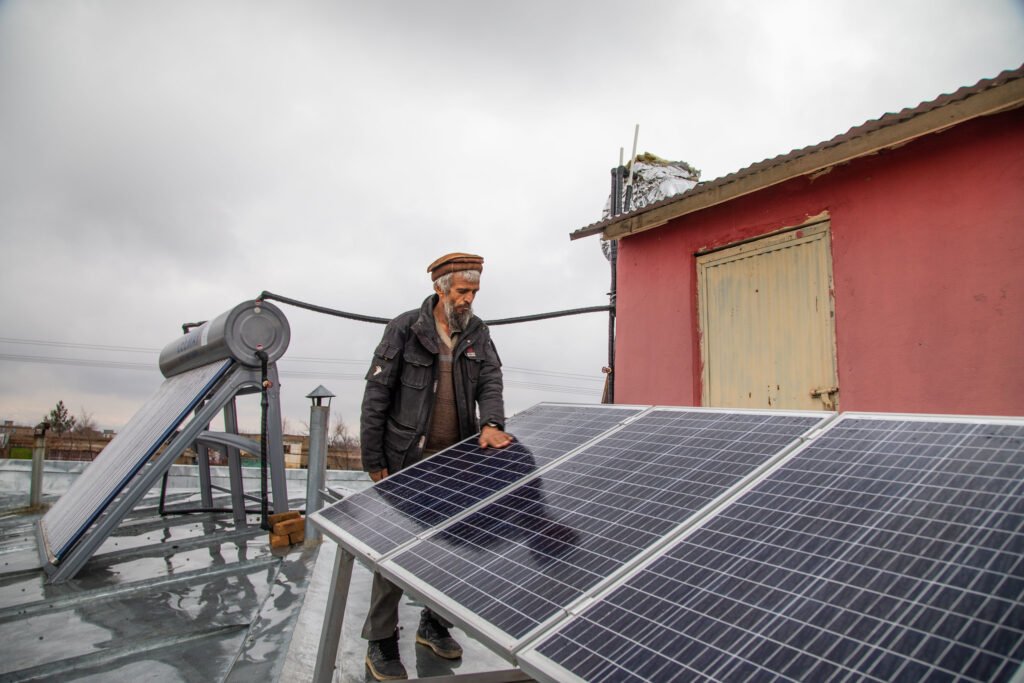
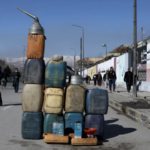
(Representational Image Courtesy: Ariana News)
Introduction
While a short war can push oil and gas prices up temporarily, a prolonged one keeps them elevated for months or years. That has been the pattern since Israel and the United States launched a joint military campaign against Iran in February 2026, striking its leaders and a wide variety of civil and military targets. What began as a territorial and military crisis quickly became an economic one with repercussions for the entire globe, as Iran’s closure of the Strait of Hormuz sent fuel prices soaring almost overnight.
The shock landed hardest on the economies of the Global South, which were already contending with poverty, instability, and slow industrial growth. These countries import a large share of their crude and gas requirements. Asian countries alone buy roughly 56 percent of their crude oil from the Middle East. Operation ‘Epic Fury’ disrupted that supply. As a result, for instance, diesel prices climbed fast. As transport costs rose, so did the price of moving goods to market, pushing up grocery bills and deepening food-security concerns from Africa to Southeast Asia.
Energy Woes of Afghanistan
No country illustrates the strain better than Afghanistan. Landlocked, Kabul experienced the shock while already burdened by years of economic and humanitarian crisis, exacerbated since 2021 by the policies of the ruling Islamic Emirate and the sanctions imposed on the country by the international community. With fewer imports and limited local production, the cost of living in Afghanistan was marked by a steep rise at a time when many households were already struggling to meet basic needs. Compounded by climate stresses such as severe drought and a massive influx of returnees from Iran and Pakistan, the situation has left the country’s (estimated) 17.4 million people facing acute food insecurity.
Ironically, Afghanistan has some of the lowest electricity access rates in the world. Kabul fares better than the rest of the country, with around 70 percent of residents connected to the grid. Nationally, however, only some 33 percent of the population has access to power, while rural access remains below 20 percent, according to the UNDP. Most households still rely on firewood, charcoal, and animal waste for cooking and heating, and on kerosene or candles for light, even though the country has untapped potential in wind, solar, and hydropower.
Ironically, the war initially worked in Afghanistan’s favour on one front. With the Strait of Hormuz blocked, Iran began prioritising fuel exports to Afghanistan, more than it had before the conflict. Afghanistan also leaned heavily on Iraq, the Central Asian Republics, Belarus, and Russia to keep petroleum flowing during the crisis, underscoring just how dependent the country remains on imports for the resource.
In urban centres, the gap left by an underbuilt grid is filled largely by diesel — generators supply an estimated 35 percent of Kabul’s electricity — while liquefied petroleum gas has become a common substitute for wood in households that can afford it. In Kabul, though prices vary by region, type, and local markets, the prices of brand-new empty LPG cylinders are not fixed; instead, a tentative price is designated for them. The typical cost of an empty 5 kg to 10 kg Liquid Petroleum Gas (LPG) cylinder in Kabul (varying based on its brand, material, and purchase location) increased to 800 and 1,200 Afghanis, from its earlier price of 700 and 1,000 Afghanis. The rather small increase was due to Afghanistan’s already diversified imports from a number of countries other than Iran. For instance, by 2025, Afghanistan had become the largest buyer of Russian LPG at 418,000 tons of imports annually, even though this reflected both the scale of unmet domestic demand and the country’s continuing reliance on outside suppliers (even for a stopgap fuel).
Afghanistan stated that the price of a litre of petrol in February 2026 was $0.91. By March, it had climbed to $0.97. In July 2026, the price further increased to $1.032. The war has also affected the price of other commodities such as food. As announced by the World Food Program (WFP), a 20 to 47 percent rise in food costs has occurred. John Aylieff, head of Afghanistan’s WFP, stated that disruption in the Strait of Hormuz not only raised the prices but caused postponements in the delivery of nutritious biscuits. This disruption also restricted aid and humanitarian operations. Likewise, the price of transporting food to Afghanistan has tripled.
A new report from the International Food Policy Research Institute emphasises how the hostilities by the U.S. and Israel have directly affected food security in Afghanistan, which heavily relies on imports. By mid-April, the combined impact of increased import and transport costs, as well as supply disruptions, had led to the increase in the price of potatoes by 105 percent, tomatoes by 71 percent, Palawi (rice cooked with pieces of carrot and raisins) by 38 percent, Sholae (plain cooked rice) by 32 percent, sugar by 27 percent, wheat grain by 17 percent, and cooking oil by 12 percent. However, the onus was on Pakistan, rather than on Iran. According to Shafi Azam, director of the Economic Affairs Directorate at the Ministry of Foreign Affairs of Afghanistan, ‘Pakistan used the trade restrictions for political pressure, due to which the prices of products increased’. Health and pharmaceutical supply chains are other sectors in which Afghans have been hugely affected after the outbreak of the war in the Middle East.
Nevertheless, the Islamic Emirate officials maintained that they have tried to regulate the increase in costs, as a result of which there is relative stability in Afghanistan, even when the cost of fuel in neighbouring countries is 40 to 60 percent higher than in Afghanistan. Based on a statement by Kochi Yousafzai, spokesperson for the Afghan government-owned oil and gas company, about 15,000 tons of petroleum products are imported daily.
In addition, Afghanistan’s Chamber of Commerce and Investment (ACCI), in coordination with national traders, said that petroleum products are obtainable in adequate amounts in Afghanistan’s bazaars, although any increase in imports would be a challenge. Officials of the Chamber further stated that their focus is on avoiding cost increases, dealing with any fuel scarcity, and developing the quality of petroleum products. Mohammad Wali Amini, head of the chamber’s executive board, said that while a small increase in fuel prices is normal, adequate petroleum imports are continuing through Aqina (Faryab province), Torghundi (Herat province), and several other dry/land ports.
Chronic Dependency: Untapped Potential
Dependency on external sources is the real story for Afghanistan’s energy sector. Despite sitting on substantial unexploited mineral and hydrocarbon reserves, the country imports the bulk of its oil from Iran, Russia, and Central Asia, and roughly 80 percent of its overall power from neighbours including Uzbekistan, Kyrgyzstan, Turkmenistan, and Tajikistan. Domestic production exists but remains underdeveloped. Soviet-era surveys identified more than fifteen oil and gas fields in the north, three of which — Khwaja Gogerdak, Djarquduk, and Yatimtaq — were developed in Mazar province. Crude reserves are largely untouched in the Amu Darya and Afghan-Tajik basins. Eleven coal mines, concentrated between Herat and Badakhshan, supply a modest share of household cooking and heating needs.
Hydropower is Afghanistan’s strongest domestic asset, accounting for more than half of the country’s grid-connected capacity. Its history stretches back to 1893, when the first hydroelectric plant was built at Jebal Seraj outside Kabul, with major expansion following in the mid-twentieth century at sites in Kabul and Helmand provinces. Today, the country’s hydro output is anchored by a handful of key dams: Naghlo, which supplies most of Kabul’s electricity at 100 megawatts; Mahipar, with 66 megawatts; Surubi, with 22 megawatts; Darunta in Nangarhar, with 11 megawatts; Kajaki in Helmand; and Dahla in Kandahar.
The Afghan-India Friendship Dam, also known as the Salma Dam, in Herat’s Chesht district, stands out both for its scale and symbolism — built by India, a longstanding strategic partner, at a cost of roughly $300 million and completed in 2016, it produces about 42 megawatts and serves an estimated 250,000 households. The Italian-built Bakhsh Abad dam in Farah province adds further capacity; Germany financed the 180-megawatt structure.
Beyond hydropower, Afghanistan has made modest inroads into wind and solar energy. A wind facility built in Panjshir province in 2008 and a solar-wind hybrid project in Herat represent early steps, and roughly 90 percent of the country’s wind potential is concentrated in the western provinces of Herat, Farah, and Nimroz. Solar power has proven especially useful in rural areas cut off from the grid. A joint UNFPA-UNDP initiative has used solar systems to power maternal health services in remote villages, and a separate UNDP program has installed solar systems in 30 health centres and 15 schools across Kabul and Kapisa provinces.
Crisis Management: Way Forward
All of this leaves Afghanistan vulnerable whenever a crisis such as the Iran war disrupts regional energy flows. The country simply does not have enough of its own oil, gas, or refining capacity in reserve to absorb an external shock, and its patchwork of imports from Iran, Pakistan, and Central Asia leaves it susceptible to disruption on multiple fronts. The war has made that vulnerability harder to ignore, and it has strengthened the case — made for years by energy planners and international donors alike — for Afghanistan to invest far more seriously in the resources it already has.
The path forward is politically and financially difficult. Afghanistan needs a unified national grid rather than the fragmented regional networks it currently operates, so that power generated in one province can reliably reach areas experiencing shortages in another. Its existing hydropower stations need better coordination and modernisation to secure supply and expand capacity. New investment in wind and solar — where the country has clear natural advantages — could meaningfully reduce its dependence on imported fuel over time. International partners, particularly India, are likely to remain essential to financing that transition.
None of this, however, will happen quickly. Ordinary Afghans will have to absorb the cost of a war fought beyond their borders: higher fuel prices, strained supply chains, and an energy system that was already stretched thin before the crisis began. The war has been a reminder, in Afghanistan as much as anywhere else in the Global South, of how vulnerable countries become when their energy security depends on the stability of an extended neighbourhood. A serious push toward domestic and renewable generation, with a credible target date such as 2032, would give Afghanistan a measure of insulation in future when regional conflict sends shockwaves through the region’s energy markets.
REFERENCES
Kiatgrajai, Maythiwan. (2026). Energy Security in the Shadow of Geopolitical Conflict: How CASE Countries are Navigating the 2026 Fuel Crisis. https://caseforsea.org/energy-security-in-the-shadow-of-war-how-case-countries-are-navigating-the-2026-fuel-crisis/
Prough, Caroline. (2026, April 14). War In Iran Creates Unrest In The US And Middle East. The Oarsman. https://veniceoarsman.com/16231/features/war-in-iran-creates-unrest-in-the-us-and-middle-east/
Upham, Pual et al. (2017, December 28). The renewable energy sector in Afghanistan: Policy and potential. Wires Energy and Environment. https://wires.onlinelibrary.wiley.com/doi/epdf/10.1002/wene.280
Aminjonov, Farkhod. Afghanistan’s energy security: Tracing Central Asian countries’ contribution. FriedRich Ebert Stiftung. https://www.researchgate.net/profile/Farkhod-Aminjonov/publication/343193863_Tracing_Central_Asian_countries_contribution_to_Afghanistan’s_energy_security/links/5f1b3d3192851cd5fa44d577/Tracing-Central-Asian-countries-contribution-to-Afghanistans-energy-security.pdf?_sg%5B0%5D=started_experiment_milestone&origin=journalDetail&_rtd=e30%3D
Rahmati, Fidel. (2026, June 6). Only 33% of Afghans Have Access to Electricity, UNDP Says. The Khama Press News Agency. https://www.khaama.com/only-33-of-afghans-have-access-to-electricity-undp-says/
Upham, Pual et al. (2017, December 28). The renewable energy sector in Afghanistan: Policy and potential. Wires Energy and Environment. https://wires.onlinelibrary.wiley.com/doi/epdf/10.1002/wene.280
The Impact of the US-Iran War on Afghanistan Economy. Review of Afghanistan Development. https://afgreview.com/en/economic/us-iran-war-impact-on-afghanistan-economy/, May 7, 2026.
Paterson, Anna. (2005 October). Understanding Markets in Afghanistan. The Afghanistan Research and Evaluation Unit (AREU). https://urbanpolicy.net/wp-content/uploads/2022/12/051000_Paterson_PetrolMkt.pdf
Reuters. (2025, December 26). Russia almost doubles LPG exports to Central Asia, Afghanistan this year, sources say. Reuters. https://www.reuters.com/business/energy/russia-almost-doubles-lpg-exports-central-asia-afghanistan-this-year-sources-say-2025-12-26/
Haddad, Mohammed. (2026, March 12, 07:30 AM (GMT)). Which countries have seen the highest petrol prices since the Iran war?. AL JAZEERA. https://www.aljazeera.com/news/2026/3/11/which-countries-have-seen-the-highest-petrol-prices-since-the-iran-war
Ariana News. (2026, May 5). Food prices surge 20% in Afghanistan as Hormuz crisis disrupts supply routes. AtnNEWS. https://www.ariananews.af/food-prices-surge-20-in-afghanistan-as-hormuz-crisis-disrupts-supply-routes/
Rahmati, Fidel. (2026, April 17). Food prices in Afghanistan jump up to 47%, WFP warns. Afghanistan Peace Campaign. https://afghanistanpeacecampaign.org/2026/04/17/food-prices-in-afghanistan-jump-up-to-47-wfp-warns/
KabulNow. (2026, May 4). Strait of Hormuz Closure Triples Aid Costs, Delays Food Deliveries to Afghanistan, WFP Says.KabulNOW. https://kabulnow.com/2026/05/strait-of-hormuz-closure-triples-aid-costs-delays-food-deliveries-to-afghanistan-wfp-says/
Qazizai, Fazelminallah. (2026, 10 April). How Afghanistan stayed afloat in region reeling from global fuel crisis. ARAB NEWS Pakistan.
https://www.arabnews.pk/node/2639460/world
Qadiry, Liluma. (2026, April 06). Rising Global Fuel Prices Impact Afghanistan’s Markets.TOLO News. https://tolonews.com/index.php/business-198695
Kapralova, Daria et al. (2020 December). Assessment of oil and gas resources of northern Afghanistan and their impact on energy security in the country. https://www.researchgate.net/publication/347604102_Assessment_of_oil_and_gas_resources_of_northern_Afghanistan_and_their_impact_on_energy_security_in_the_country
Kwan, Sergey. (2017, September 14). India provides more developmental assistance to Afghanistan. The Times of Central Asia. https://timesca.com/india-provides-more-developmental-assistance-to-afghanistan/
Slimankhil, Ahmad Khalid et al. (2020). Renewable energy potential for sustainable development in Afghanistan. Journal of SUSTAINABLE ENERGY REVOLUTION. Vol 1 (1): Pages 8-15. https://repa-int.org/journals/files/jser/Manuscript-10.37357-1068-jser.1.1.02.pdf
Rahmaty, Hasibullah et al. (2019, November 16-19). Afghanistan fuel market prediction. Research and Education Promotion Association (REPA). https://www.researchgate.net/publication/342148418_Afghanistan_fuel_market_prediction
Lalzoy, Najibullah. (2021, July 14). Salma Dam under Taliban rockets. The Khama Press News Agency. https://www.khaama.com/salma-dam-under-taliban-rockets-4346345/
Salma Dam Inauguration, VOA Ashna TV. (2016, Jun 4). Voice of America (VOA) Pashto. YouTube. https://www.youtube.com/watch?v=zElCZTTnpFY
Salma Dam Political Aspects VOA Ashna TV. (2016, June 4). Voice of America (VOA) Dari. YouTube. https://www.youtube.com/watch?v=d1jbbICXLN
Weekly analysis. (2016, June 11-18). Infrastructural projects: dams and recent progress. Center for Strategic and Regional Studies (CSRS). https://csrsaf.org/en/?p=996
Sharma, Prof. M.P et al. (2019, April 04). Energy Scenario of Afghanistan. IOSR Journal of Engineering (IOSRJEN). Vol. 09, Issue 4. pp. 50- 59. https://iosrjen.org/Papers/vol9_issue4/Series-1/H0904015059.pdf
(Qudratullah Yousofi is a Kabul-based English instructor. He has worked as an English interpreter & translator, a peace ambassador, and a researcher. This analysis has been published as part of the ongoing ‘Fragility, Conflict and Peace Building’ project of Mantraya. Opinions expressed in this Special Report are the author’s. All MISS publications are peer-reviewed.)