MANTRAYA SPECIAL REPORT#28: 30 OCTOBER 2026
QUDRATULLAH YOUSOFI, BIBHU PRASAD ROUTRAY & SHANTHIE MARIET D’SOUZA
Abstract
Five years after the fall of Kabul, Afghanistan’s anti-Taliban resistance, led by the National Resistance Front, Afghanistan Freedom Front, and other smaller groups, has survived, adapted, and expanded its activities into new provinces such as Badakhshan and Nuristan. Yet mere expansion is not victory. The Taliban retains overwhelming control of state institutions, security forces, and territory, while the resistance remains fragmented, under-resourced, and confined to specific provinces. Although the resistance cannot currently defeat the Taliban militarily, it could still become a consequential political alternative if the resistance groups establish unity and find ways to overcome their resource constraints, particularly if the Taliban regime falters under mounting regional and internal pressures.
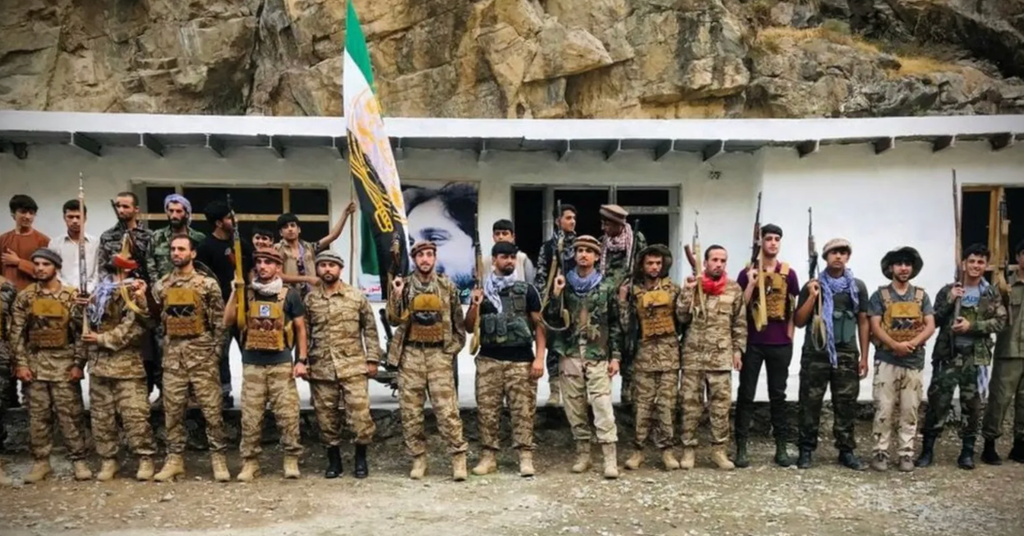
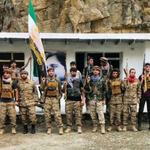
(The National Resistance Front. Image Courtesy: The BBC)
Introduction: Expanding resistance landscape
On the evening of 22 October 2026, the Afghanistan Freedom Front (AFF), one of the anti-Taliban resistance groups, launched a rocket attack on the Taliban military and training facilities at Bagram Airfield in Parwan province. The AFF claimed the strike killed or wounded more than 10 Taliban members and caused material damage to the installations. Before the attack, during 7-18 October, anti-Taliban resistance groups carried out more than 18 major operations across 12 Afghan provinces. The targets included security posts, intelligence personnel, and military vehicles and supply facilities. While these developments are small in military terms, they do raise a bigger question of political relevance: Can Afghanistan’s anti-Taliban resistance provide an effective opposition to the Taliban or even eventually dislodge them?
More than five years after the fall of Kabul in August 2021, there are no clear answers. In the face of the Taliban onslaught, the resistance has continued to survive, adapt, and even expand its geographical footprint. One can argue, of course, that survival is not victory. The Taliban’s control over the country, after all, remains mostly unchallenged. Its security apparatus is present in all major population centres. Moreover, the resistance remains fragmented, resource-constrained and has not been able to hold territory for a sustained period of time. Simultaneously, though, history is replete with examples of insurgencies that remain strategically relevant even as their capacity for effecting outright regime change is limited. More importantly, insurgencies find ground when legitimate concerns of the population are not addressed, as increasingly is the case in Afghanistan.
Proliferation of Resistance Groups and the War of Attrition
Founded in August 2021 by Ahmad Massoud, the son of the legendary anti-Soviet and anti-Taliban commander Ahmad Shah Massoud, the National Resistance Front (NRF) remains the most prominent armed anti-Taliban resistance group in the country. Based on its own account, NRF emerged in Panjshir province and neighbouring Baghlan province’s Andarab district. The group was styled explicitly as heir to the Northern Alliance. It consisted of former government civilians, former ANDSF personnel, including many low-ranking officers, and former opposition members. However, with the resistance in Panjshir falling to Taliban forces the following month, the NRF adopted a dispersed guerrilla posture. Massoud went into exile in Tajikistan. The group, with more than 5,000 members dispersed across roughly 20 provinces, combines guerrilla warfare, hit-and-run attacks, urban operations and information warfare. It has its strongest roots among Tajik communities in northern and northeastern Afghanistan. While its traditional centre has been Panjshir, over the years its activities have expanded into Ahmad Shah Massoud’s Jamiat-e-Islami strongholds in Baghlan, Takhar, Badakhshan, and other northern provinces.
The AFF constitutes another important component of the armed resistance against the Taliban. It was founded in March 2022 by former Chief of General Staff of the Afghan National Army (ANA), Muhammad Yasin Zia, who also served as governor of Takhar, Afghanistan’s deputy defence minister and deputy head of intelligence (NDS). Alongside the NRF, the AFF has conducted attacks against Taliban personnel and installations not only in Zia’s stronghold of northern Afghanistan but also in predominantly Pashtun areas, including Nuristan, Kunar, and even Kandahar and Helmand, suggesting a wider ethnic co-optation and operational reach than the NRF.
The Afghanistan United Front (AUF), under Lt. General Sami Sadat, former Commanding General of the Afghan National Special Operations Corps and Joint Special Operations Command (JSOC), announced the launch of its resistance movement on 1 August 2026. By 17 August, the AUF had conducted 25 operations, claiming to have killed 41 Taliban members and wounded 24 more. AUF claimed over 60 guerrilla attacks through September[1], consisting mostly of ambushes and assassinations with a significant focus on southern Afghanistan, underscoring Sadat’s intention to challenge the Taliban in its traditional stronghold.
Other smaller resistance fronts have also emerged[2], including former Vice President Amrullah Saleh’s Afghan Green Trend, the National Mobilisation Front, the National Independence Front, the Afghanistan Republican Front, the New Horizon Organisation, the Freedom and Justice Movement, the Afghan Liberation Movement, Turkestan Freedom Tigers, the National Resistance Council, the National Liberation Front of Afghanistan, the Unknown Soldiers of Hazaristan, the allegedly Hazara-centred Freedom and Democracy Front, and the Freedom Corps.
More recently, yet another group, the Sepahiyan-e Mihan (Homeland Soldiers Front), led by a former ANA commander Abdul Qayum Malang, shot into fame by briefly seizing control of the Yaftali-Sufla district in Badakhshan province on 17 July, marking the first occasion of the resistance movement capturing a district administrative centre, albeit briefly. While these groups individually conduct a small percentage of the overall attacks claimed by the resistance, in aggregate, their attacks rival those of the big three- the NRF, the AUF and the AFF. For example, in early October, the National Mobilisation Front, in operation since October 2023, claimed responsibility for assassinating the Head of Discovery and Intelligence of the Nangarhar Central Prison in the first week of October 2026.
Between November 2023 and July 2026, a total of 438 verified attacks by the resistance groups have been documented in the UN reports. In 2026, such attack claims have increased, with at least four groups[3] adding to the intensity of attacks against the Taliban.
Making of a Civil War
In a media interview in September of this year, former Afghan vice-president Amrullah Saleh depicted the prevailing state of affairs in Afghanistan as a ‘civil war,’[4] warning that the ‘conflict remains limited for now but could develop into a more violent and destructive confrontation.’ While claims by Saleh, who is a senior figure of the Afghan Green Trend and also the co-founder of the NRF, are assessed by most analysts as a stretch, there are obvious signs that the resistance has become more geographically dispersed.
In July, anti-Taliban groups mounted a series of operations in Badakhshan. In addition to the previously mentioned actions of the Sepahiyan-e Mihan, the AFF claimed attacks against Taliban positions in Zebak, and the NRF claimed an attack in Kuran wa Munjan. In September, the AFF launched attacks in Nuristan’s Kamdesh district and claimed to have killed five Taliban fighters. The Taliban, in response, asserted it had killed 28 ‘Pakistan-backed’ fighters and detained another 32. Regardless, the expansion into Nuristan marked an expansion of the resistance groups’ activities.
That dispersal has continued into October, when the AUF claimed 16 attacks against Taliban forces across eight provinces between 22 and 29 October, killing 18 Taliban members. Attacks were carried out in Kandahar, Kapisa, Helmand, Ghor, Zabul, Badakhshan, Ghazni and Parwan provinces.[5] AFF fighters also targeted Taliban intelligence operatives in Pul-e Alam, the capital of Logar province, and claimed an attack on a Taliban intelligence unit in Takhar. The National Independence Front claimed to have attacked a Taliban vehicle in Herat, in the west. On 22 October, the AFF claimed rocket attacks on Taliban military facilities at Bagram airfield in Parwan. Overall, resistance groups claimed ten attacks across seven provinces in the single week between 18 and 22 October. Many of these claims, however, cannot be independently verified.
Badakhshan has also emerged as a significant centre of anti-Taliban resistance, with the NRF, AFF, AUF, and smaller groups conducting sustained guerrilla operations. Notably, the NRF assassinated Faizabad’s mayor on 13 August 2026, while the AFF maintained engagements in Zibak district. The province’s rugged mountainous terrain, historical resistance networks, local grievances over Taliban restrictions on mining, and internal Taliban rivalries provide favourable conditions for insurgent recruitment and operations. Unlike in Panjshir in 2021, the resistance groups now possess five years of operational experience and have demonstrated an unwillingness to surrender despite Taliban military pressure. Badakhshan’s strategic location, bordering Tajikistan, Pakistan and China through the Wakhan Corridor, further enhances its significance, potentially offering the resistance external sponsors amid deteriorating Taliban relations with its neighbours and China’s concerns over the presence of Uyghur militant groups, particularly the East Turkestan Islamic Movement (ETIM).
However, the ability of the resistance groups to cause nationwide disruption and carry out attacks on the Taliban remains limited. The NRF itself claims a much larger operational record than its occasional attacks would suggest. In August, the group’s head of foreign relations, Ali Nazary, told the Long War Journal that the NRF had conducted more than 2,000 military operations since 2021.[6] This figure, however, substantially exceeds the 300-plus attacks publicly claimed by the group on X. The significance of these developments is that the resistance has demonstrated an ability to survive repeated Taliban countermeasures. The Taliban is certainly not yet facing an urgent challenge.
The Structural Constraints and Resource Imbalance
The Taliban is no longer what it was, an insurgent organisation. It is the de facto authority of Afghanistan with control of state institutions, security forces, administrative structures, and substantial financial resources. The symbiotic nexus with al Qaeda and its presence in law enforcement agencies has added another dimension to the security posture. This has enhanced Taliban security operations, allowing the arrest and use of coercive measures to disrupt resistance networks. As it stands, while the resistance may impose costs on the Taliban, the regime can impose considerably greater costs on the resistance.
The fundamental obstacle for the resistance is the enormous imbalance of resources. The resistance depends heavily on clandestine networks and small combat formations. The NRF’s resources, for instance, depend largely on diaspora donations and limited revenues that appear to include unofficial levies in areas it influences, augmented by other informal or illicit sources. The NRF, in particular, has built the most institutionalised fundraising apparatus: Massoud Foundation USA[7], a registered 501(c)3 accepting tax-deductible donations via Stripe and Zelle; public crowdfunding campaigns framed as humanitarian relief; a Washington office registered with the US Justice Department since November 2021 to lobby against Taliban recognition; and a European advocacy channel run by Ali Maisam Nazary. This gives the NRF a visible identity as an alternative to the Taliban, with advocacy and fundraising closely intertwined.
By contrast, the AFF, as per open-source reporting, lacks an equivalent charitable foundation. It relies instead on direct appeals to Western governments, informal networks of former ANDSF officers, and diaspora sympathisers rather than a structured donor base. Its leadership figures have met Western journalists and analysts in Europe to build visibility.
The Taliban, moreover, retains the advantage of geography. It holds the capital and every provincial centre, and the resistance groups, despite expanding their activities, have not secured lasting control over any district. Most of the NRF’s attacks have been concentrated in Jamiat-e-Islami strongholds in the north, namely Panjshir, Baghlan, Takhar, and Badakhshan, and its operational focus has gradually moved from Panjshir towards Baghlan’s Andarab valley and neighbouring provinces. It has also claimed operations in Kabul and Herat. The NRF’s predominantly Tajik leadership and social base is both an asset and a limitation, providing access to communities and terrain in which the resistance has historical roots but hindering a transition from regional to genuinely national movement.
The NRF does include Uzbek, Hazara, and some Pashtun elements. Since August, the Pashtun-led AUF has claimed attacks in Kandahar and Helmand, while the AFF, which says it has Pashtun representation, has claimed operations there as well. These claims, however, remain largely unverified and consist mostly of small ambushes and targeted killings. They do not yet show a Pashtun base capable of challenging the Taliban in its heartland.
Nonetheless, the stated strength of the NRF and AFF isn’t only in their armed campaigns but in their increasing attempts to portray themselves as more than armed groups, rather as components of an alternative political order. The NRF seeks to dismantle what it calls the Taliban’s illegitimate occupation, to build an inclusive and representative government, and to fight for a decentralised political solution for Afghanistan. The group also emphasises civilian rights and opposition to Taliban restrictions. According to its manifesto, published in 2024, the AFF seeks to create ‘a new social contract that meets the needs and requirements of building a prosperous society endowed with freedom, equality, and human dignity.’
In fact, all these groups appear to field – or at least attempt to field – a synthesis of military and political strategies, including operations based on strategic communication, protection of civilian rights, and efforts to build relationships across Afghanistan’s different communities. Their participation in the Vienna Process and their participation in the Cambridge Security Conference in September 2026 have given them an international platform and visibility. NRF leader Ahmad Massoud regularly travels abroad to represent the interests of those opposed to Taliban rule, particularly the diaspora. Moreover, outreach and support by Pakistan have added another dimension of external support and sanctuary. Pakistani military and intelligence officials have held meetings with leaders of anti-Taliban resistance groups to discuss potential support. Receiving support from Pakistan, a deeply unpopular country, however, can be a double-edged sword for these groups.
A Fragmented Resistance Landscape & Lack of ‘Unity of Effort’
Perhaps predictably, the principal weakness of the resistance is that it is not yet a unified national movement, its growth notwithstanding, especially its impressive transformation from a narrow, Panjshir-centred uprising to a force operating on widespread fronts with different leaders, constituencies, and areas of operation. The NRF and the AFF are the largest groups. The Pashtun-led AUF is focused on the south. The Afghan Liberation Movement, the NMF, and the Badakhshan-based Sepahiyan-e Mihan operate alongside them. Beyond these is a long tail of smaller or largely online formations that have limited or no verified ground presence.
There remains, though, no unified chain of command. Coordination and cooperation exist, but political objectives and social constituencies remain distinct. Rifts too have surfaced. For instance, the NRF and Jamiat-e Islami suspended cooperation with the National Council for the Salvation of Afghanistan in 2024. To become a credible alternative to the Taliban, the resistance would need a coalition extending well beyond its northern base, which would mean reaching out to larger Pashtun communities, co-opting other ethnic and regional constituencies, and developing a political programme capable of attracting Afghans who oppose aspects of Taliban rule but do not necessarily support a return to the pre-2021 political order.
The external environment at present has not pushed these groups together. The NRF is led from Tajikistan, which hosts political figures and activity, though evidence of direct military assistance is thin. Iran’s posture is one of hedging. Allegations of financial and logistical support coexist with Tehran’s increasingly pragmatic ties to the Taliban and its public denial of backing armed groups. Western governments keep political contact through channels such as the Vienna Process, but there is no credible evidence of weapons transfers, and Massoud himself has said the NRF seeks political rather than foreign military intervention. GCC and OIC states, which have invested heavily in the Taliban regime, show no interest in funding the armed groups.
Can the Resistance Prevail?
The current evidence does not demonstrate that the resistance possesses the capability to defeat the Taliban militarily.. Taliban control of the state, security apparatus, and territory gives it formidable advantages. The resistance has not demonstrated an ability to hold substantial territory for long periods, and its funding and organisational fragmentation remain serious weaknesses.
Still, if prevailing means eventually becoming a viable political and military alternative to Taliban rule, the possibility is harder to dismiss. The anti-Taliban resistance has certainly managed to show is that it has not lost the possibility of changing the political equation. In Afghanistan, where governments have repeatedly appeared invincible before suddenly collapsing, that distinction does matter. The resistance has survived for five years. It has retained experienced commanders, former security personnel, and local networks. It has expanded beyond Panjshir. It continues to conduct attacks, and its political representatives continue to seek international recognition.
There is also a potentially important external factor. Afghanistan’s deteriorating regional security environment, including renewed tensions between Pakistan and the Taliban, could place additional pressure on the Taliban’s security resources. The steady deterioration of Pakistan-Afghanistan relations over the issue of the Taliban harbouring anti-Pakistan terrorist groups does not automatically benefit the resistance, but it could prompt a Pakistani unconventional warfare support effort such as long maintained in Kashmir. A Taliban government facing multiple security pressures could thus become more vulnerable to organised domestic opposition.
Ultimately, then, the future of the resistance will depend less on the number of attacks it can claim than on whether it can address the three significant challenges confronting it: unity, resources, and political outreach. The NRF and the other groups have demonstrated that the Taliban cannot completely eliminate armed opposition, but until these three concerns are addressed, it will be difficult to convert persistence into political momentum is considerably harder.
Four scenarios, therefore, frame the trajectory of the resistance in Afghanistan. These include continued stalemate; resistance fragmentation and self-defeat; resistance coalescence amid Taliban internal collapse; or effective Taliban consolidation with resistance marginalisation. The rising tempo of claimed attacks and their geographic diversification show that the resistance is not fading. Absence of a unified command, of a confirmed state patron, and of verified territorial gains suggests that continued stalemate is the most likely outcome in the near term, with the resistance persisting as a diffuse, low-intensity irritant rather than coalescing into a serious challenge to Taliban control, and with some risk of further fragmentation. This would change only if external sponsorship or a rupture within the Taliban materially alters the calculus.
END NOTES
[1] Will Selbar, “Anti-Taliban resistance claims attacks across Afghanistan in September”, Long War Journal, 30 September 2026, https://www.longwarjournal.org/archives/2026/09/anti-taliban-resistance-claims-attacks-across-afghanistan-in-september.php
[2] Will Selbar, “The Anti-Taliban Resistance Has Survived. Can It Win?”, War On the Rocks, 27 October 2026, https://warontherocks.com/the-anti-taliban-resistance-has-survived-can-it-win/. (ibid)
[3] These include the Sepahiyan-e Mihan, the National Mobilisation Front, the New Horizon Organisation, and the Freedom and Justice Movement.
[4] “Afghanistan Has Entered Civil War, Says Former Vice President Saleh”, Afghanistan International, 25 September 2026, https://www.afintl.com/en/202609251026.
[5] “16 Attacks Kill 18 Taliban Fighters In One Week, Says Afghanistan United Front”, Afghanistan International, 30 October 2026, https://www.afintl.com/en/202610307299.
[6] Will Selber, “Resistance to Taliban rule persists in Afghanistan”, Long War Journal, 20 August 2026, https://www.longwarjournal.org/archives/2026/08/afghanistans-resistance-persists-despite-taliban-rule.php.
[7] Website of Massoud Foundation USA, https://www.massoudfoundation.us/.
(Qudratullah Yousofi is a Kabul-based English instructor. Dr. Shanthie Mariet D’Souza is the Founder & Executive Director of MISS. Dr. Bibhu Prasad Routray is the Director of MISS. This Special Report is part of Mantraya’s ongoing ‘Fragility, Conflict and Peace Building’ and ‘Mapping Terror & Insurgent Networks‘ projects. All MISS publications are peer-reviewed.)